


Health and Performance Far from Home
A technician wakes six months into her lunar assignment after a poor night’s sleep. While her muscles have adapted to low gravity, the long-term effects of lunar gravity on the human body remain largely unknown. Outside the habitat, radiation continues to accumulate; inside, she works daily with a small, isolated group.
One morning, a warning flashes on a life-support system. Two crew members immediately disagree on the meaning: one demands operations cease, while the other suspects a sensor malfunction. A critical decision must be made, and the nearest hospital is 384,000 kilometers away.
A permanent lunar settlement requires a healthy population. Health on the Moon encompasses more than medicine; it includes physical fitness, sleep quality, mental health, teamwork, and the ability to make sound decisions under pressure. The human being is an integral part of the system.

A Different Environment for the Human Body
Humans evolved under Earth’s gravity, atmosphere, and magnetic protection. The Moon provides none of these conditions.
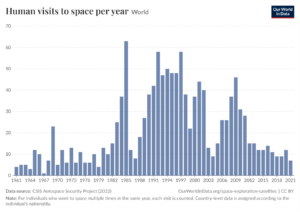
Lunar gravity is approximately one-sixth of Earth’s. Long-term studies in orbit show that very low gravity affects muscles, bones, the cardiovascular system, and other body functions. Lunar gravity may mitigate some of these effects, but evidence is limited because no human has lived on the Moon for more than a few days.
Radiation presents another major challenge. Earth’s atmosphere and magnetic field protect people from much of the radiation found in space, but lunar residents receive far less natural protection. While habitats can provide shielding and crews can limit exposure during periods of increased risk, a settlement must continuously monitor individual exposure and understand its long-term effects.
Medicine on the Moon must therefore begin with monitoring. Doctors need data on what is changing before they can decide how to respond.
The Need for Self-Contained Health
Medical care changes drastically when evacuation is difficult. On Earth, a small clinic can stabilize a seriously ill patient and transfer them to a larger hospital. A lunar clinic cannot rely on this option because returning someone to Earth requires a spacecraft, a launch opportunity, and several days of travel, even under favorable conditions.
The settlement must manage most medical problems locally. This demands diagnostic equipment, medical imaging, laboratory testing, and emergency treatment systems capable of operating with limited staff and space.
Medical systems may need to guide non-specialists. Telemedicine connects lunar crews with doctors on Earth, but communication delays complicate real-time procedures.
Medical supplies create another constraint. Medicines expire, equipment breaks, and biological materials are difficult to store. A lunar health service must decide what to stock and what risks it can accept.
Prevention becomes especially valuable when treatment options are limited.
Measuring People Without Watching Them
A settlement can collect massive amounts of health data. Wearable sensors can measure heart rate, activity, and sleep; environmental sensors can track radiation, air quality, temperature, and noise. Medical tests provide additional information, and software can combine these measurements to identify issues requiring attention.
This creates a clear business opportunity: a company could provide continuous health monitoring for lunar residents.
However, this creates an equally clear problem. A person’s heart rate may reveal stress, sleep data may suggest fatigue, and performance tests may indicate increasing mistakes. This data could help a doctor protect that person, but it could also affect whether an employer allows the person to work, operate machinery, or remain on the Moon.
Health data therefore raises questions about privacy, consent, and control. Residents must trust the systems that monitor them, while employers and medical teams require sufficient information to ensure safety. A useful service must meet both requirements.
Teams Are Part of the Safety System
Health is not solely an individual concern. A lunar settlement places people in small groups for long periods, often with limited privacy. These teams may come from different countries, professions, and cultures, and some jobs involve danger or require rapid decisions.
Fatigue, conflict, and poor communication affect technical work. A team that stops sharing information may miss a warning, and a leader who fails to listen can worsen a crisis. A crew that has worked too long may make errors even when all machinery is functioning correctly.
Training, clear procedures, and careful team selection can reduce these risks. Software might track workload to help managers identify periods of high fatigue. Teams could also receive regular training in communication, decision-making, and conflict management.
These activities hold economic value because human performance determines the settlement’s reliability.
The Workplace Shapes the Worker
Other lunar industries will influence health. Infrastructure companies determine the radiation shielding provided by habitats, while food companies influence nutrition. Energy companies keep medical and life-support equipment operational, and transport companies affect how easily people and supplies move between sites.
The habitat’s design also matters. Residents need light, exercise, quiet, privacy, and communal spaces. A technically safe habitat can still be a poor place to live for several years.
Health specialists must work with engineers before construction begins. Correcting a poor habitat design after it reaches the Moon will be extremely expensive.
This creates a market for human-performance expertise. A habitat company might hire specialists to review a design, a mining company might need help creating work schedules, and a transport operator might want to reduce fatigue among rover crews. Human performance can become a service sold to other lunar businesses.
From Healthcare to Health Services
Several types of companies could operate in this sector. One might provide medical monitoring through wearable devices, diagnostic tools, and clinical support, while another specializes in radiation dosimetry, tracking each resident’s exposure over time. A telemedicine company could connect lunar clinics with specialists on Earth.
Other businesses could focus on physical performance, providing exercise systems, rehabilitation services, or tools that monitor changes in strength and mobility.
Behavioral health creates another market. Companies could offer confidential psychological support, sleep management, team training, or tools for managing workload and fatigue.
The product does not always have to be treatment. It might be a healthier crew, fewer errors, faster recovery, or a lower probability of emergency. These outcomes must be measured.
People Who Study People Under Pressure
CSSS participants can explore these questions with Pedro Marques-Quinteiro, whose work covers teamwork, behavioral health, and performance in extreme environments. Research in Antarctic stations and space-analogue environments offers ways to study isolation, confinement, leadership, and teamwork before large groups live on the Moon.
Inês Costa, Research Manager at the Faculty of Medicine of the University of Coimbra, connects to another aspect of the problem. FMUC has expertise in extreme environments, radiobiology, and radiation dosimetry, including the biological effects of ionizing radiation.
Together, these fields address two critical aspects of lunar health: how the environment affects the body, and how people and teams perform under difficult conditions.
Keeping People Fit to Live There
For CSSS participants, the first step is to choose a person and a problem. Consider a miner exposed to radiation, a technician working night shifts, a resident recovering from an injury, a medical team preparing for emergencies, or a manager responsible for a tired crew.
Define what can go wrong and determine what information would reveal the problem early. Then, decide which service could reduce the risk or improve the outcome. The customer might purchase medical support, monitoring, training, rehabilitation, or a guarantee of qualified assistance. The customer could be the resident, an employer, an insurer, or the settlement operator.
Machines on the Moon can be repaired or replaced. People require a different standard of care.
A permanent lunar settlement must keep its residents alive. A successful settlement must also keep them healthy, capable, and able to work together.
For further reading:
– ESA: Space Analogs and Human Performance
– ESA: Ground-Based and Analogues
AI + Pedro Lacerda, August 2026